
Fall Prevention for Elderly at Home University Town
Falls are one of the leading causes of injury among older adults. A simple slip or trip can result in broken bones, head injuries, loss of independence, and lengthy recovery periods. Fortunately, many falls can be prevented with the right home modifications, daily safety habits, and professional elderly care support.
If you have an aging parent or senior family member living at home in University Town, taking preventive measures today can significantly improve their safety, confidence, and quality of life.
Why Are Elderly People More Likely to Fall?
As people age, several physical and medical changes increase the risk of falling, including:
-
Poor balance and coordination
-
Muscle weakness
-
Reduced eyesight
-
Hearing problems
-
Arthritis and joint stiffness
-
Dizziness caused by medications
-
Low blood pressure
-
Memory problems such as dementia or Alzheimer's disease
-
Neurological conditions like Parkinson's disease
-
Previous fall history
Understanding these risk factors is the first step toward preventing accidents.
Common Causes of Falls at Home
Many falls occur because of hazards that are easy to eliminate.
Common causes include:
-
Wet bathroom floors
-
Loose rugs
-
Slippery tiles
-
Poor lighting
-
Electrical wires across walkways
-
Uneven flooring
-
Cluttered rooms
-
Stairs without handrails
-
Improper footwear
-
Reaching high shelves without assistance
A careful home inspection can identify these hazards before they cause serious injuries.
Essential Home Safety Tips
Improve Lighting
Ensure every room has adequate lighting.
Install:
-
Bright LED lights
-
Motion sensor lights
-
Night lights in hallways
-
Bedside lamps
-
Stair lighting
Good visibility helps seniors walk safely at any time.
Remove Tripping Hazards
Keep floors clean and clutter-free.
Remove:
-
Loose carpets
-
Extension cords
-
Small furniture in walkways
-
Toys
-
Decorative items that block pathways
Maintain wide, clear walking spaces throughout the home.
Install Grab Bars
Bathrooms are one of the highest-risk areas.
Install grab bars:
-
Beside the toilet
-
Inside the shower
-
Near the bathtub
These provide additional support when standing or sitting.
Use Non-Slip Mats
Place anti-slip mats in:
-
Bathroom
-
Kitchen
-
Entrance areas
-
Laundry room
Avoid smooth rugs that can slide easily.
Improve Stair Safety
If your home has stairs:
-
Install sturdy handrails on both sides.
-
Repair broken steps.
-
Add anti-slip stair strips.
-
Keep stairs free of objects.
-
Ensure adequate lighting.
Choose Proper Footwear
Seniors should avoid:
-
Loose slippers
-
High heels
-
Worn-out shoes
-
Smooth soles
Instead, wear:
-
Non-slip shoes
-
Closed-back slippers
-
Comfortable walking shoes
-
Properly fitted footwear
Good footwear greatly reduces slipping.
Encourage Daily Physical Activity
Strong muscles improve balance.
Helpful exercises include:
-
Walking
-
Chair exercises
-
Stretching
-
Balance exercises
-
Light strength training
-
Physiotherapy
Regular exercise helps seniors remain active and independent.
Schedule Regular Health Checkups
Routine medical checkups can identify conditions that increase fall risk.
Doctors may evaluate:
-
Blood pressure
-
Vision
-
Hearing
-
Bone health
-
Medication side effects
-
Diabetes
-
Heart conditions
Managing these health issues lowers the chance of falls.
Review Medications
Some medications may cause:
-
Drowsiness
-
Dizziness
-
Poor balance
-
Confusion
Never stop medicines without medical advice, but discuss possible side effects with a healthcare professional.
Bedroom Safety Tips
A safe bedroom should include:
-
Easy access to light switches
-
Stable bedside table
-
Night lamp
-
Clear walking path
-
Comfortable bed height
-
Frequently used items within reach
This helps reduce nighttime accidents.
Bathroom Safety Checklist
Bathrooms require extra attention because of wet surfaces.
Recommended improvements:
-
Raised toilet seat
-
Grab bars
-
Handheld shower
-
Shower chair
-
Non-slip flooring
-
Easy-to-reach toiletries
These simple additions can prevent serious injuries.
Nutrition for Strong Bones
Healthy bones and muscles reduce injury severity.
Include foods rich in:
-
Calcium
-
Vitamin D
-
Protein
-
Magnesium
-
Potassium
Adequate hydration also prevents dizziness and weakness.
Assistive Devices That Help Prevent Falls
Depending on mobility, seniors may benefit from:
-
Walking cane
-
Walker
-
Wheelchair
-
Bedside commode
-
Adjustable bed
-
Patient lift
-
Handrails
These devices provide additional stability and confidence.
How Family Members Can Help
Family support plays a major role in fall prevention.
You can:
-
Check the home regularly
-
Assist with mobility
-
Encourage exercise
-
Monitor medications
-
Schedule doctor visits
-
Ensure proper nutrition
-
Watch for changes in balance or walking
Early intervention prevents many accidents.
Professional Elderly Care at Home
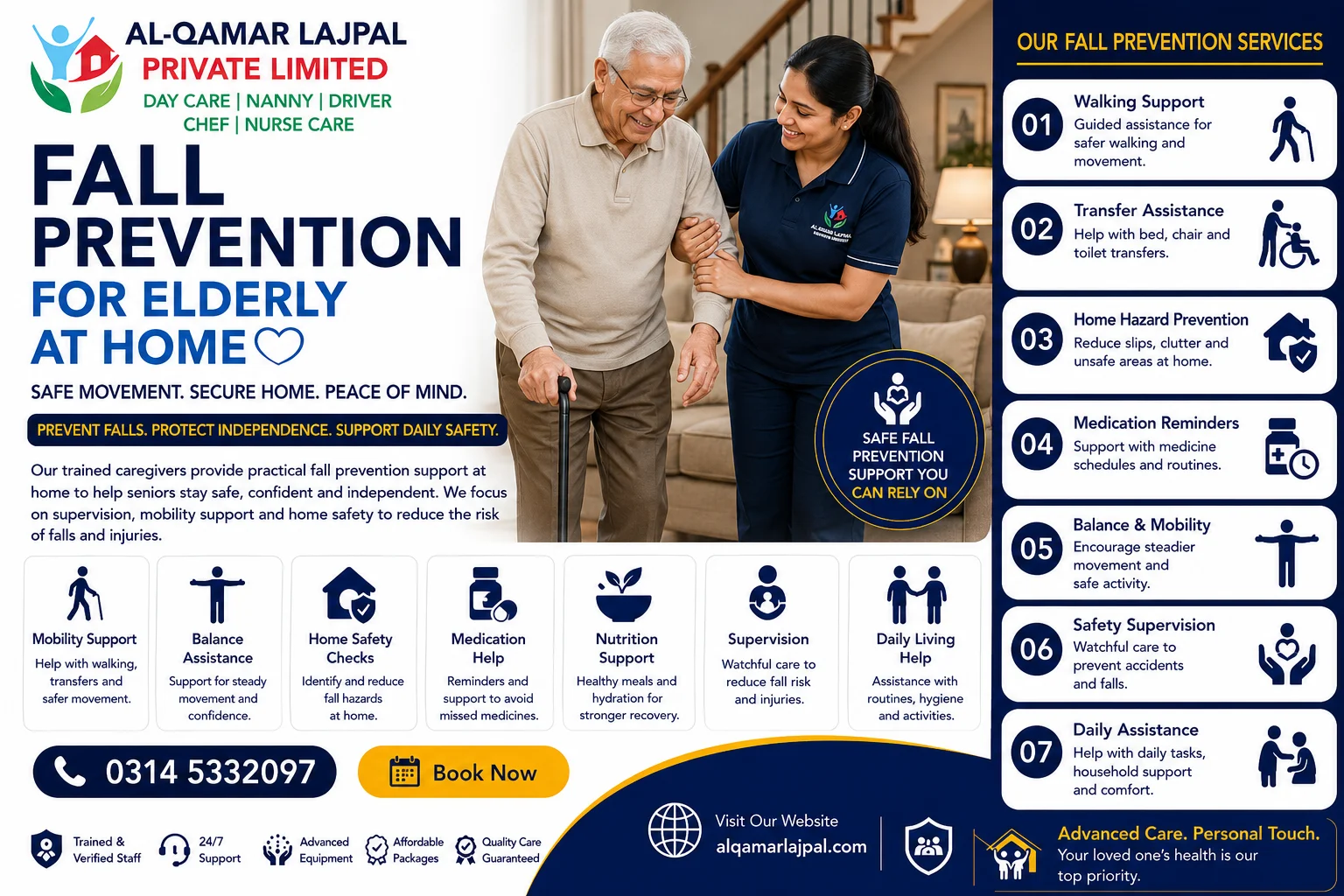
Professional caregivers help reduce fall risks by providing:
-
Mobility assistance
-
Walking support
-
Bathroom assistance
-
Medication reminders
-
Personal hygiene support
-
Safe transfers from bed to chair
-
Meal preparation
-
Continuous supervision
Having trained caregivers gives families peace of mind while allowing seniors to remain comfortably at home.
Signs an Elderly Person Needs Additional Support
Consider professional assistance if your loved one:
-
Has fallen before
-
Walks unsteadily
-
Frequently loses balance
-
Needs help using the bathroom
-
Has memory loss
-
Lives alone
-
Has recently undergone surgery
-
Experiences dizziness
Receiving help early can prevent future injuries.
Final Thoughts
Falls are not an inevitable part of aging. By making simple home modifications, encouraging healthy daily habits, managing medical conditions, and seeking professional assistance when needed, families can significantly reduce the risk of injuries for elderly loved ones.
Creating a safe home environment in University Town helps seniors maintain independence, confidence, and a better quality of life while giving families reassurance that their loved ones are protected.
Frequently Asked Questions
Older adults are more likely to fall due to muscle weakness, poor balance, reduced vision, medication side effects, and age-related medical conditions.
Remove tripping hazards, improve lighting, install grab bars, use non-slip mats, and ensure walkways remain clear at all times.
Walking, balance exercises, stretching, strength training, and physiotherapy can improve stability and reduce fall risk.
Consider professional care if the senior has experienced falls, struggles with mobility, has memory problems, or requires assistance with daily activities.
Yes. Professional caregivers provide mobility support, supervision, safe transfers, medication reminders, and assistance with everyday tasks, significantly lowering the likelihood of falls.
Keep Your Loved Ones Safe with Al-Qamar Lajpal
If your elderly family member needs professional assistance at home in University Town, Al-Qamar Lajpal provides experienced caregivers, patient attendants, and elderly care services designed to improve safety, comfort, and independence.
Our trained staff can assist with mobility support, personal care, medication reminders, companionship, and daily living activities to help reduce the risk of falls while ensuring peace of mind for families.
📞 Phone & WhatsApp: 0314 5332097
🌐 Website: alqamarlajpal.com
Contact Al-Qamar Lajpal today to learn more about our professional elderly home care services.