
How to Care for Aging Parents at Home
Caring for aging parents at home is one of the most meaningful responsibilities a family can undertake. As parents grow older, they often need assistance with daily activities, medication management, mobility, and emotional support. Providing quality home care helps seniors maintain their dignity, independence, and comfort while staying in a familiar environment surrounded by loved ones.
However, caring for elderly parents can also be physically and emotionally demanding. Families often struggle to balance work, personal responsibilities, and caregiving duties. Understanding the right approach and seeking professional assistance when necessary can make caregiving easier and significantly improve the quality of life for seniors.
Understand Their Individual Needs
Every senior has different healthcare requirements. Some may only need companionship, while others require professional nursing care due to chronic illnesses, stroke recovery, dementia, Parkinson's disease, diabetes, or post-surgical conditions.
Begin by evaluating:
- Overall physical health
- Mental and emotional wellbeing
- Mobility level
- Medical conditions
- Daily living assistance requirements
- Medication schedule
A proper assessment allows families to create an effective care plan.
Create a Safe Home Environment
Falls are among the leading causes of injuries in older adults. Making the home safer can prevent serious accidents.
Important safety improvements include:
- Install grab bars in bathrooms
- Use non-slip flooring and bath mats
- Remove loose rugs and electrical cords
- Improve lighting throughout the home
- Install handrails on stairs
- Keep frequently used items within easy reach
- Use comfortable chairs with armrests
A safe environment helps elderly individuals move confidently and independently.
Encourage Healthy Nutrition
Good nutrition plays a vital role in maintaining strength and preventing illness.
A balanced diet should include:
- Fresh fruits and vegetables
- Lean protein
- Whole grains
- Healthy fats
- Calcium-rich foods
- Adequate hydration
If your parent has diabetes, kidney disease, or heart conditions, follow a diet recommended by their healthcare provider.
Ensure Proper Medication Management
Many seniors take multiple medications daily. Missing doses or taking incorrect medications can cause serious health complications.
Helpful medication management tips include:
- Use pill organizers
- Create a medication schedule
- Set phone reminders
- Keep updated medication records
- Monitor side effects
- Attend regular medical checkups
Professional home nurses can also administer medications safely and monitor the patient's condition.
Support Personal Hygiene
Maintaining hygiene protects seniors from infections while preserving their confidence and comfort.
Daily care may include:
- Bathing assistance
- Oral hygiene
- Hair care
- Nail trimming
- Dressing assistance
- Skin care
- Incontinence care
Professional caregivers ensure these tasks are completed respectfully and safely.
Encourage Regular Physical Activity
Even gentle physical activity improves mobility, balance, and circulation.
Suitable activities include:
- Walking
- Light stretching
- Chair exercises
- Physiotherapy
- Balance exercises
Always consult a healthcare professional before beginning any exercise routine.
Provide Emotional Support
Many elderly individuals experience loneliness, anxiety, or depression after retirement or losing loved ones.
Families can improve emotional wellbeing by:
- Spending quality time together
- Encouraging conversations
- Celebrating family events
- Listening patiently
- Supporting hobbies
- Arranging visits with friends and relatives
Emotional care is just as important as physical care.
Monitor Chronic Health Conditions
Many seniors live with long-term medical conditions such as:
- Diabetes
- Hypertension
- Heart disease
- Arthritis
- COPD
- Dementia
- Parkinson's disease
Regular monitoring of blood pressure, blood sugar, oxygen levels, and other vital signs helps prevent complications.
Maintain a Daily Routine
A structured routine helps seniors feel secure and reduces confusion.
A daily schedule may include:
- Morning hygiene
- Healthy breakfast
- Medication
- Exercise
- Social interaction
- Afternoon rest
- Evening meals
- Relaxation
- Bedtime routine
Consistency improves both physical and mental health.
Know When Professional Home Care Is Needed
Family caregivers may eventually need professional support, especially if the senior requires:
- 12-hour or 24-hour care
- Skilled nursing services
- Post-surgical recovery
- Stroke rehabilitation
- Dementia care
- Parkinson's care
- Bedridden patient care
- Catheter care
- Wound dressing
- IV therapy
- Medication administration
Professional caregivers reduce family stress while ensuring seniors receive expert medical attention in the comfort of their homes.
Benefits of Professional Home Nursing Services
Professional home nursing offers several advantages:
- Personalized care plans
- One-on-one attention
- Faster recovery
- Reduced hospital visits
- Better medication compliance
- Improved comfort
- Enhanced safety
- Family peace of mind
- Cost-effective long-term care
- Better quality of life
Final Thoughts
Caring for aging parents at home requires patience, compassion, planning, and the right support. By creating a safe environment, promoting healthy habits, managing medications, and providing emotional encouragement, families can help their loved ones enjoy a healthier and more fulfilling life.
When care becomes more complex, professional home nursing services provide experienced support that ensures seniors receive high-quality healthcare without leaving the comfort of home.
Frequently Asked Questions
The best approach includes providing a safe environment, balanced nutrition, medication management, emotional support, regular medical checkups, and professional home nursing when needed.
You should consider hiring a home nurse if your parent needs assistance with daily activities, medication administration, wound care, mobility support, or management of chronic illnesses.
Install grab bars, improve lighting, remove tripping hazards, use non-slip mats, install handrails, and keep essential items within easy reach to reduce the risk of falls.
Professional caregivers assist with personal hygiene, mobility, medication reminders, meal preparation, companionship, vital sign monitoring, and specialized nursing care for medical conditions.
Home care allows seniors to recover in a familiar environment, receive personalized attention, reduce the risk of hospital-acquired infections, and maintain emotional well-being while staying close to family.
Need Professional Elderly Home Care?
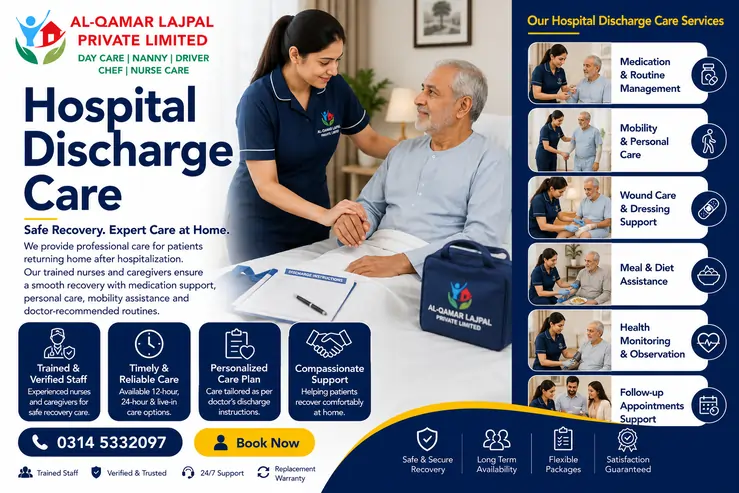
Al-Qamar Lajpal provides reliable and compassionate home healthcare services tailored to the needs of elderly patients.
Our Services Include:
- 12-Hour & 24-Hour Home Nursing
- Elderly Care at Home
- Patient Attendant Services
- Skilled Nursing Care
- Medication Management
- Post-Hospital Recovery Care
- Dementia & Alzheimer's Care
- Stroke & Paralysis Patient Care
- Bedridden Patient Care
- Physiotherapy Support
- Affordable Caregiver Services at Home
- Affordable Home Nursing Services
- Affordable Home Patient Attendant
- Ambulance Service
- Blood Test at Home
- Diabetes Patient Care
- Disabled Care at Home
📞 Phone & WhatsApp: 0314 5332097
🌐 Website: https://alqamarlajpal.com
Contact Al-Qamar Lajpal today to arrange professional home care services that provide comfort, dignity, and peace of mind for your loved ones.