
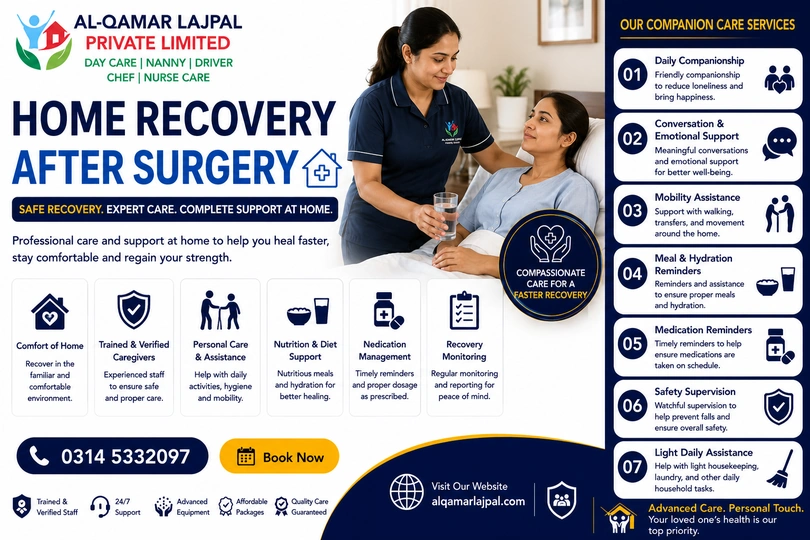
Home Recovery After Surgery Gulberg Greens: A Complete Guide for Safe and Comfortable Healing
Recovering after surgery is one of the most important stages of treatment. Whether the surgery was minor or major, proper care at home can reduce complications, speed up healing, and improve the patient's overall well-being. Many patients leave the hospital within a few days, but their recovery continues for several weeks or even months.
Professional home recovery support allows patients to heal in a familiar environment while receiving the assistance they need with mobility, medication, hygiene, nutrition, and daily activities.
At Al-Qamar Lajpal, we understand that every patient's recovery journey is unique. Our experienced caregivers and patient attendants help families provide safe and comfortable post-surgical care at home.
Why Home Recovery Matters
The period immediately after surgery is critical because the body is repairing damaged tissues and regaining strength. Proper home care helps:
-
Reduce the risk of infections
-
Improve wound healing
-
Prevent unnecessary hospital readmission
-
Support physical and emotional recovery
-
Increase patient comfort
-
Encourage better sleep and relaxation
-
Reduce stress for family members
A structured recovery plan allows patients to regain independence safely.
Common Surgeries That Require Home Recovery Support
Patients recovering from many different procedures may benefit from home care, including:
-
Orthopedic surgery
-
Knee replacement surgery
-
Hip replacement surgery
-
Spine surgery
-
Heart surgery
-
General surgery
-
Abdominal surgery
-
Gallbladder surgery
-
Hernia repair
-
Cancer surgery
-
Gynecological surgery
-
Urological surgery
-
Plastic or reconstructive surgery
Each type of surgery has different recovery requirements, making personalized care essential.
Essential Home Recovery Tips After Surgery
Follow Your Doctor's Instructions
Always follow discharge instructions regarding medications, wound care, movement restrictions, diet, and follow-up appointments.
Take Medications on Time
Pain medications, antibiotics, and other prescribed medicines should be taken exactly as instructed.
Skipping medication may delay recovery or increase complications.
Proper Wound Care
Keeping the surgical wound clean and dry is essential.
Patients should:
-
Change dressings as instructed
-
Wash hands before touching the wound
-
Avoid unnecessary pressure
-
Watch for redness or swelling
-
Report unusual discharge immediately
Eat a Healthy Diet
Nutrition plays a major role in tissue healing.
Recovery meals should include:
-
Lean protein
-
Fresh vegetables
-
Fruits
-
Whole grains
-
Healthy fats
-
Plenty of fluids
Protein and vitamins help repair tissues more quickly.
Stay Hydrated
Drinking enough water helps:
-
Improve circulation
-
Prevent constipation
-
Support medication effectiveness
-
Speed tissue healing
Get Enough Rest
The body heals during sleep.
Patients should maintain a comfortable sleeping position that does not put pressure on the surgical area.
Gradually Increase Physical Activity
Complete bed rest is rarely recommended for long periods.
Depending on medical advice, patients should:
-
Walk short distances
-
Perform light movements
-
Practice prescribed exercises
-
Improve circulation safely
Early movement reduces the risk of blood clots.
Managing Pain During Recovery
Pain management should include:
-
Prescribed medications
-
Ice or heat therapy (when recommended)
-
Proper body positioning
-
Relaxation techniques
-
Gentle movement
Pain should gradually improve over time.
Severe or worsening pain requires immediate medical attention.
Preventing Infection
Good hygiene significantly reduces infection risk.
Important precautions include:
-
Clean hands before wound care
-
Clean bedding regularly
-
Wear clean clothing
-
Avoid smoking
-
Avoid touching the wound unnecessarily
-
Keep the recovery environment clean
Emotional Recovery Is Important Too
Many patients experience:
-
Anxiety
-
Mood changes
-
Temporary depression
-
Fear of movement
-
Lack of confidence
Family support and professional caregivers provide reassurance and emotional comfort throughout recovery.
Mobility Assistance After Surgery
Patients often require help with:
-
Walking
-
Sitting
-
Standing
-
Bathroom use
-
Bathing
-
Dressing
-
Climbing stairs
-
Using walkers or wheelchairs
Safe mobility reduces the risk of falls and injuries.
Personal Hygiene During Recovery
Maintaining hygiene improves comfort and prevents infections.
Caregivers may assist with:
-
Bathing
-
Grooming
-
Oral hygiene
-
Hair washing
-
Changing clothes
-
Bed baths when necessary
Warning Signs That Require Immediate Medical Attention
Seek urgent medical care if the patient develops:
-
High fever
-
Heavy bleeding
-
Difficulty breathing
-
Severe chest pain
-
Increasing wound redness
-
Pus or foul-smelling discharge
-
Persistent vomiting
-
Sudden swelling
-
Severe pain that does not improve
-
Loss of consciousness
Early medical treatment can prevent serious complications.
Benefits of Professional Home Recovery Support
Professional caregivers provide:
-
Medication reminders
-
Mobility assistance
-
Personal hygiene support
-
Meal assistance
-
Vital signs monitoring
-
Emotional support
-
Fall prevention
-
Family assistance
-
Daily recovery observation
Their support allows patients to recover safely while giving family members peace of mind.
Tips for Family Members
Family caregivers can help by:
-
Creating a clean recovery environment
-
Following medication schedules
-
Encouraging healthy meals
-
Helping with safe movement
-
Attending follow-up appointments
-
Monitoring recovery progress
-
Communicating with healthcare providers
Working together improves recovery outcomes.
Why Choose Al-Qamar Lajpal?
Al-Qamar Lajpal is committed to providing dependable home care services that support patients throughout their recovery journey. We focus on patient comfort, safety, dignity, and personalized assistance to help individuals regain independence after surgery.
Whether short-term or long-term care is needed, our trained caregivers provide reliable support tailored to each patient's condition.
Frequently Asked Questions
Recovery time varies depending on the type of surgery, the patient's age, overall health, and how closely post-operative care instructions are followed. Some patients recover within a few weeks, while others may require several months.
Yes. Professional caregivers can assist with mobility, personal hygiene, medication reminders, meal preparation, and daily activities, making recovery safer and more comfortable.
A balanced diet rich in protein, fruits, vegetables, whole grains, and plenty of fluids supports faster healing and strengthens the immune system.
Seek medical attention immediately if the patient experiences high fever, severe pain, heavy bleeding, difficulty breathing, unusual wound discharge, or any sudden worsening of symptoms.
Professional support reduces the risk of complications, promotes safe mobility, assists with daily care, and provides peace of mind for both patients and their families.
Need Professional Home Recovery After Surgery Gulberg Greens?
Recovering from surgery becomes easier with experienced home care support. Al-Qamar Lajpal provides compassionate caregivers and patient attendants who assist with daily activities, mobility, hygiene, medication reminders, and overall recovery in the comfort of your home.
📞 Phone & WhatsApp: 0314 5332097
🌐 Website: alqamarlajpal.com
Contact us today to learn how our professional home recovery services can help you or your loved one recover safely and comfortably.