
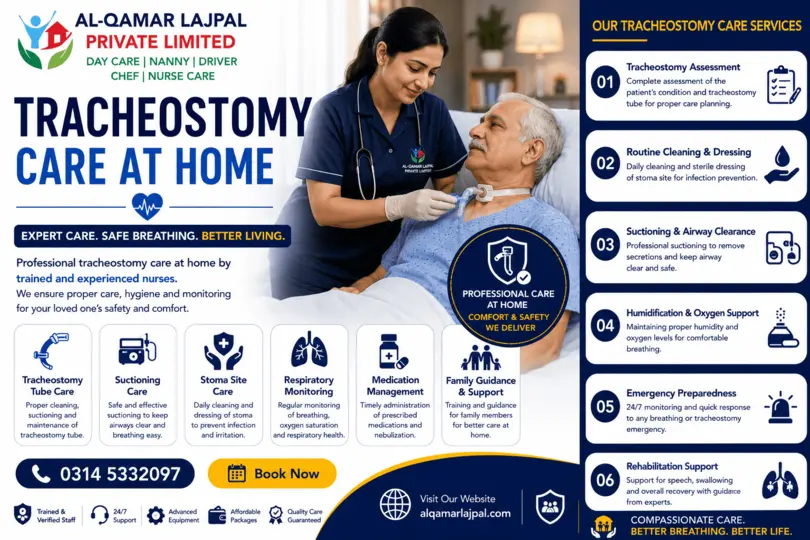
Tracheostomy Care at Home: A Complete Guide for Safe and Professional Patient Care
A tracheostomy is a surgically created opening in the neck that allows air to enter the lungs through a tube inserted into the windpipe (trachea). Patients with long-term breathing difficulties, neurological disorders, severe injuries, or those recovering from prolonged mechanical ventilation often require a tracheostomy. While the procedure can significantly improve breathing and quality of life, proper tracheostomy care at home is essential to prevent complications and ensure patient safety.
Many families feel anxious after a loved one returns home with a tracheostomy tube. However, with the right knowledge, proper hygiene, and professional nursing support, home tracheostomy care can be safe, comfortable, and effective.
What Is Tracheostomy Care at Home?
Tracheostomy care at home involves maintaining the tracheostomy tube, cleaning the stoma (the opening in the neck), removing secretions through suctioning, monitoring breathing, preventing infections, and ensuring the patient receives adequate oxygen when needed.
Professional home nursing services help patients recover in a familiar environment while reducing unnecessary hospital visits and lowering the risk of hospital-acquired infections.
Who Needs Tracheostomy Care at Home?
Home tracheostomy care is commonly required for patients who have:
-
Long-term ventilator dependency
-
Stroke-related breathing difficulties
-
Spinal cord injuries
-
Neurological disorders
-
Head and neck cancers
-
Severe trauma
-
Chronic respiratory diseases
-
ALS (Amyotrophic Lateral Sclerosis)
-
Muscular dystrophy
-
Advanced Parkinson's disease
These patients often require continuous monitoring by experienced caregivers or registered nurses.
Daily Tracheostomy Care Routine
Maintaining a proper daily care routine is one of the most important aspects of tracheostomy management.
1. Cleaning the Stoma
The skin around the tracheostomy opening should be cleaned daily using sterile supplies. Keeping the area dry helps reduce irritation and prevents bacterial infections.
2. Changing Dressings
Tracheostomy dressings should be replaced whenever they become wet or soiled. Clean dressings protect the skin and maintain hygiene.
3. Cleaning the Inner Cannula
If the tube has a reusable inner cannula, it should be cleaned according to the healthcare provider's instructions. Disposable cannulas should be replaced as recommended.
4. Suctioning Secretions
Patients who cannot cough effectively may need suctioning to remove mucus. Proper suctioning techniques help keep the airway clear and improve breathing.
5. Humidification
Because the nose normally warms and humidifies inhaled air, tracheostomy patients often require humidified air to prevent thick secretions and airway dryness.
Signs That Immediate Medical Attention Is Needed
Families should seek emergency medical assistance if the patient experiences:
-
Difficulty breathing
-
Tube blockage
-
Excessive bleeding
-
Tube displacement
-
Blue lips or fingertips
-
High fever
-
Thick yellow or green secretions
-
Severe swelling around the tracheostomy
-
Persistent coughing with respiratory distress
Prompt medical intervention can prevent life-threatening complications.
Preventing Infection
Good hygiene is the foundation of safe tracheostomy care at home.
Important infection prevention measures include:
-
Washing hands before every procedure
-
Using sterile equipment
-
Cleaning suction catheters properly
-
Changing tracheostomy ties when necessary
-
Keeping the stoma clean and dry
-
Avoiding dust, smoke, and polluted environments
-
Replacing humidification equipment regularly
Early recognition of infection helps prevent serious respiratory complications.
Nutrition and Hydration
Many tracheostomy patients also have swallowing difficulties. Depending on the patient's condition, nutrition may be provided through:
-
Oral feeding (when approved)
-
NG tube feeding
-
PEG tube feeding
Proper hydration helps keep mucus thin, making airway clearance easier.
The Importance of Professional Home Nursing
Experienced home nurses play a vital role in tracheostomy care by providing:
-
Airway assessment
-
Professional suctioning
-
Tube care
-
Medication administration
-
Oxygen therapy
-
Vital signs monitoring
-
Infection control
-
Emergency response
-
Patient rehabilitation support
-
Family caregiver education
Professional home care improves patient safety while reducing caregiver stress.
Benefits of Tracheostomy Care at Home
Receiving professional tracheostomy care at home offers many advantages, including:
-
Comfortable recovery in familiar surroundings
-
Lower risk of hospital-acquired infections
-
Personalized one-on-one nursing care
-
Reduced hospital admissions
-
Better emotional well-being
-
Flexible care schedules
-
Improved patient independence
-
Cost-effective long-term care
-
Family involvement in recovery
-
Better overall quality of life
Essential Equipment for Home Tracheostomy Care
Every home caring for a tracheostomy patient should have:
-
Suction machine
-
Suction catheters
-
Sterile gloves
-
Sterile saline
-
Gauze dressings
-
Tracheostomy ties
-
Humidifier
-
Pulse oximeter
-
Oxygen cylinder or concentrator (if prescribed)
-
Spare tracheostomy tube
-
Emergency resuscitation bag
Having emergency supplies readily available provides peace of mind for families.
Family Caregiver Tips
Family members should:
-
Learn proper suctioning techniques.
-
Keep emergency contact numbers nearby.
-
Watch for signs of infection.
-
Never force a blocked suction catheter.
-
Ensure equipment remains clean and functional.
-
Attend regular follow-up appointments.
-
Maintain good communication with healthcare professionals.
Confidence and education help families provide safer home care.
Conclusion
Tracheostomy care at home requires dedication, proper training, and consistent hygiene practices. With professional nursing support, the right medical equipment, and informed family caregivers, patients can safely recover and enjoy a better quality of life in the comfort of their homes.
Choosing experienced home healthcare professionals ensures that every aspect of airway management, infection prevention, and emergency preparedness is handled with the highest standards of care.
Frequently Asked Questions
Tracheostomy care at home involves cleaning the tracheostomy site, suctioning secretions, maintaining the tube, preventing infections, and monitoring the patient's breathing under professional guidance.
Ideally, trained registered nurses or experienced caregivers with knowledge of airway management should provide tracheostomy care. Family members should also receive proper training.
The cleaning schedule depends on the type of tube and the patient's condition. Daily cleaning of the stoma and regular maintenance of the inner cannula are generally recommended according to medical advice.
Redness, swelling, foul-smelling discharge, fever, increased mucus production, and difficulty breathing may indicate an infection and require immediate medical evaluation.
Professional home care ensures proper airway management, reduces infection risks, provides emergency support, improves patient comfort, and helps families confidently manage long-term care.
Need Professional Tracheostomy Care at Home?
Al-Qamar Lajpal provides reliable and compassionate Tracheostomy Care at Home delivered by trained nurses and experienced caregivers. We are committed to ensuring patient safety, comfort, and quality care in the home environment.
Our Home Healthcare Services Include:
-
Professional Tracheostomy Care
-
Skilled Home Nursing
-
ICU Care at Home
-
Ventilator Patient Care
-
Oxygen Therapy
-
Patient Attendant Services
-
Elderly Care
-
Post-Surgical Care
-
Bedridden Patient Care
-
Home Medical Support
- Affordable Caregiver Services at Home
- Affordable Home Nursing Services
- Disabled Care at Home
- Diabetes Patient Care
- Blood Test at Home
- Affordable Home Patient Attendant
- Nanny Services
📞 Call / WhatsApp: 0314 5332097
🌐 Website: alqamarlajpal.com
Contact Al-Qamar Lajpal today to arrange professional home healthcare services tailored to your loved one's needs.