
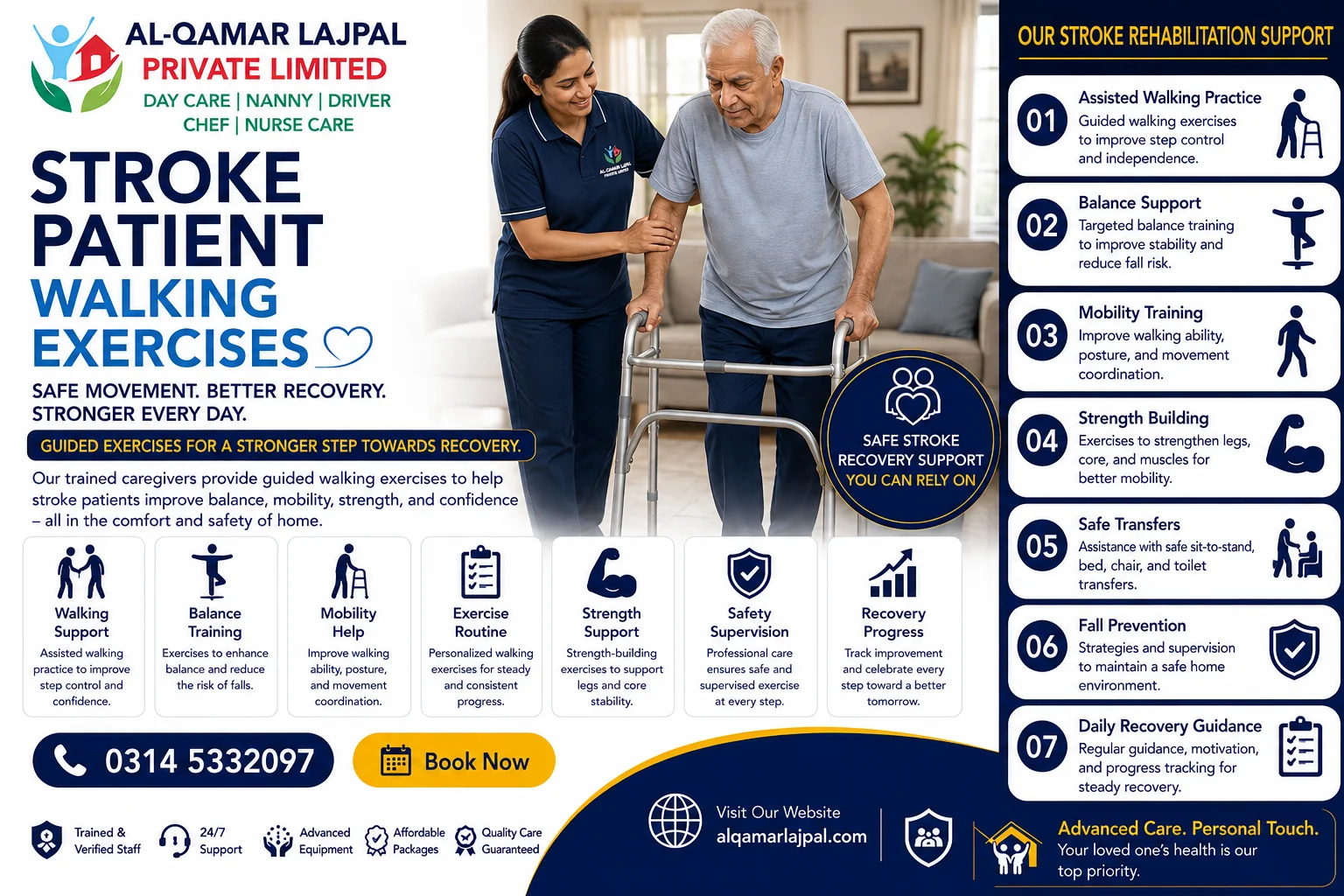
Stroke Patient Walking Exercises Bahria Enclave Islamabad: A Complete Guide to Safe Recovery
Recovering from a stroke is a gradual process that requires patience, consistency, and proper rehabilitation. One of the most important parts of recovery is learning to walk again safely. Walking exercises help stroke survivors regain balance, strength, coordination, confidence, and independence. However, these exercises should always be introduced carefully according to the patient's physical condition and medical advice.
If your loved one is recovering from a stroke in Bahria Enclave Islamabad, understanding the right walking exercises can significantly improve their rehabilitation journey while reducing the risk of falls and complications.
Why Walking Exercises Are Important After a Stroke
A stroke often weakens one side of the body, making walking difficult. Many patients experience muscle stiffness, poor balance, reduced coordination, and limited mobility. Walking exercises help restore these abilities by encouraging the brain to create new pathways through neuroplasticity.
Benefits include:
-
Improves muscle strength
-
Restores balance and coordination
-
Enhances blood circulation
-
Reduces stiffness and muscle tightness
-
Prevents muscle wasting
-
Increases confidence
-
Improves heart and lung health
-
Supports independence in daily life
-
Lowers the risk of pressure sores from prolonged bed rest
-
Promotes better mental health
When Can a Stroke Patient Start Walking?
Every patient's recovery is different. Some patients begin standing within a few days, while others may require several weeks or months before walking safely.
Walking exercises should only begin after approval from:
-
Neurologist
-
Rehabilitation physician
-
Physiotherapist
Starting too early without supervision may increase the risk of injury or falls.
Safety Rules Before Walking
Always follow these precautions:
-
Wear non-slip footwear.
-
Remove loose rugs and obstacles.
-
Keep floors dry.
-
Use proper walking aids if recommended.
-
Ensure good lighting.
-
Have a caregiver nearby.
-
Avoid overexertion.
-
Stop immediately if dizziness, chest pain, or severe fatigue occurs.
Safety should always come before speed.
Step 1: Bed Mobility Exercises
Before walking begins, patients should improve movement in bed.
Exercises include:
-
Rolling from side to side
-
Knee bending
-
Ankle pumps
-
Leg slides
-
Gentle hip movements
These improve circulation and prepare muscles for standing.
Step 2: Sitting Balance Training
The patient learns to sit without support.
Exercises include:
-
Sitting upright
-
Weight shifting
-
Reaching for objects
-
Arm raises
-
Controlled trunk movements
Good sitting balance is the foundation for standing.
Step 3: Standing Practice
Once sitting balance improves, standing exercises begin.
Practice includes:
-
Standing with support
-
Equal weight distribution
-
Mini squats
-
Standing marches
-
Heel raises
These exercises strengthen leg muscles and improve stability.
Step 4: Weight Transfer Exercises
Many stroke survivors place too much weight on the stronger leg.
Weight-shifting exercises teach the body to distribute weight evenly.
Examples:
-
Side-to-side shifts
-
Forward and backward shifts
-
Standing reaches
-
Single-leg support (with assistance)
Step 5: Walking with Support
Patients usually begin walking using:
-
Walker
-
Quad cane
-
Walking stick
-
Parallel bars
Short walks with proper supervision help rebuild confidence and endurance.
Step 6: Heel-to-Toe Walking
Once basic walking improves, therapists introduce gait training.
This exercise helps:
-
Improve coordination
-
Increase balance
-
Reduce limping
-
Normalize walking patterns
Always perform this exercise with supervision.
Step 7: Side Walking
Walking sideways strengthens hip muscles and improves balance.
Benefits include:
-
Better lateral stability
-
Stronger hip muscles
-
Improved coordination
-
Lower fall risk
Step 8: Obstacle Walking
As recovery progresses, patients learn to walk around safe obstacles.
This helps improve:
-
Judgment
-
Foot placement
-
Reaction time
-
Confidence in daily environments
Step 9: Stair Practice
Stair climbing should only begin after approval from a physiotherapist.
Always:
-
Hold the handrail.
-
Take one step at a time.
-
Move slowly.
-
Have someone nearby.
Daily Walking Goals
Walking duration depends on the patient's condition.
A gradual plan may include:
-
5–10 minutes initially
-
Increase by a few minutes every week
-
Rest whenever needed
-
Focus on quality rather than distance
Consistency produces better results than pushing too hard.
Signs to Stop Walking Immediately
Stop exercising if the patient experiences:
-
Severe dizziness
-
Chest pain
-
Sudden weakness
-
Difficulty breathing
-
Severe headache
-
Loss of balance
-
Confusion
Seek medical attention if symptoms persist.
Role of Caregivers During Walking Exercises
Family members and caregivers play an essential role in recovery.
They should:
-
Stay beside the patient
-
Encourage without forcing
-
Monitor fatigue
-
Keep the environment safe
-
Assist with walking aids
-
Celebrate small improvements
Emotional support often motivates patients to continue rehabilitation.
Additional Rehabilitation Activities
Walking should be combined with:
-
Range-of-motion exercises
-
Strength training
-
Balance exercises
-
Hand therapy
-
Speech therapy
-
Occupational therapy
-
Healthy nutrition
-
Adequate hydration
A comprehensive rehabilitation program delivers the best outcomes.
Nutrition for Better Recovery
Healthy nutrition supports muscle healing and brain recovery.
Recommended foods include:
-
Lean protein
-
Fish
-
Eggs
-
Fresh vegetables
-
Fruits
-
Whole grains
-
Healthy fats
-
Plenty of water
Always follow dietary recommendations provided by healthcare professionals.
Common Mistakes to Avoid
Avoid these mistakes during recovery:
-
Walking without supervision
-
Ignoring medical advice
-
Skipping physiotherapy sessions
-
Exercising despite severe pain
-
Using unsuitable footwear
-
Walking on slippery surfaces
-
Expecting immediate results
Recovery requires patience and consistency.
Final Thoughts
Walking again after a stroke is a major milestone that can restore confidence and independence. Progress may seem slow at first, but every step contributes to rebuilding strength, balance, and mobility. Regular walking exercises, proper supervision, and professional rehabilitation can greatly improve a stroke survivor's quality of life.
If you are caring for a stroke patient in Bahria Enclave Islamabad, combining safe walking exercises with compassionate daily support can make recovery smoother and more successful.
Frequently Asked Questions
Walking exercises should begin only after approval from a doctor or physiotherapist. The timing depends on the patient's overall condition and recovery progress.
Some patients regain independent walking, while others may require a walker, cane, or caregiver support depending on the severity of the stroke.
Most patients start with 5 to 10 minutes of supervised walking and gradually increase the duration as strength and endurance improve.
The safest walking aid varies by individual needs. A physiotherapist may recommend a walker, quad cane, or walking stick based on the patient's balance and mobility.
Yes. Trained caregivers can assist with safe walking practice, mobility support, daily activities, fall prevention, and encouragement while following the rehabilitation plan provided by healthcare professionals.
Professional Stroke Patient Care Services Bahria Enclave Islamabad
Looking for experienced caregivers to support a stroke patient's recovery at home? Al-Qamar Lajpal provides trained caregivers, patient attendants, home nursing support, elderly care, physiotherapy assistance, and rehabilitation-focused home care tailored to your loved one's needs.
Contact Al-Qamar Lajpal
📞 Phone & WhatsApp: 0314 5332097
🌐 Website: alqamarlajpal.com
Let our compassionate team help your loved one recover safely, comfortably, and confidently at home.