
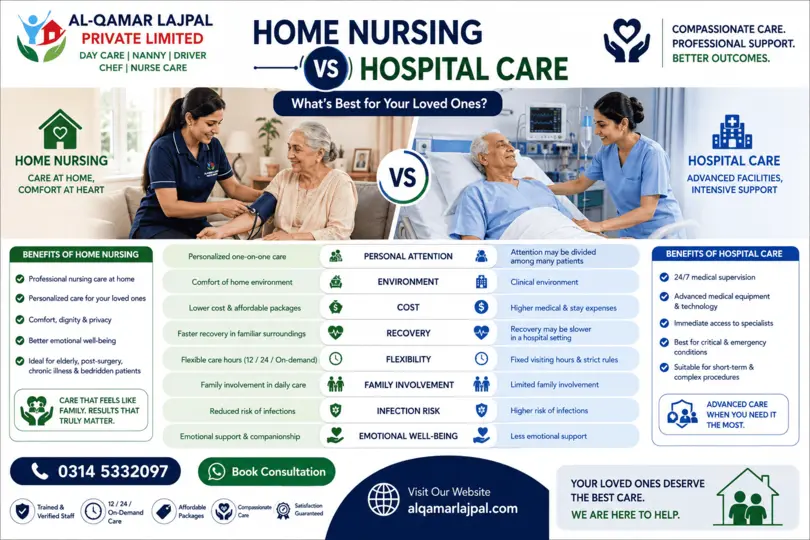
Home Nursing vs Hospital Care: Which Is the Better Choice?
When a loved one becomes ill, recovering from surgery, or requires long-term medical assistance, one of the biggest decisions families face is whether to choose home nursing or hospital care. Both options have their own advantages and are suitable for different medical situations. Understanding the differences can help families make the right decision based on the patient's health condition, comfort, and financial situation.
In recent years, home healthcare services have become increasingly popular because they provide professional medical care in the comfort of the patient's own home. At the same time, hospitals remain essential for emergency treatment, surgeries, and intensive medical interventions.
This guide explains the key differences between home nursing and hospital care so you can choose the best option for your loved one.
What Is Home Nursing?
Home nursing is a healthcare service where qualified nurses or caregivers provide professional medical care at the patient's home. These services may include:
-
Medication administration
-
Injection and IV therapy
-
Wound dressing
-
Blood pressure monitoring
-
Blood sugar monitoring
-
Catheter care
-
Tracheostomy care
-
Post-surgery nursing
-
Elderly care
-
Palliative care
-
Rehabilitation support
-
Daily personal care and hygiene
Home nursing allows patients to recover in a familiar and comfortable environment while receiving professional healthcare.
What Is Hospital Care?
Hospital care involves medical treatment provided inside a hospital under the supervision of doctors, specialists, nurses, and advanced medical equipment.
Hospital care is generally required for:
-
Emergency medical conditions
-
Major surgeries
-
Intensive Care Unit (ICU) treatment
-
Severe infections
-
Critical trauma
-
Continuous specialist monitoring
-
Advanced diagnostic procedures
Hospitals provide immediate access to multiple medical specialists and emergency facilities.
Home Nursing vs Hospital Care: Key Differences
1. Comfort and Emotional Well-being
One of the biggest advantages of home nursing is comfort. Patients stay in their own home, surrounded by family members, familiar surroundings, and personal belongings.
Hospital environments may cause anxiety, stress, and disturbed sleep due to constant activity and unfamiliar surroundings.
Winner: Home Nursing
2. Personalized Care
Home nursing usually offers one-on-one attention. The nurse focuses entirely on one patient, resulting in personalized care.
In hospitals, nurses often care for multiple patients during a shift, reducing individual attention.
Winner: Home Nursing
3. Medical Equipment
Hospitals have advanced diagnostic equipment, operation theatres, laboratories, and emergency facilities available at all times.
Home nursing can provide many medical services, but complex treatments requiring specialized equipment usually require hospital admission.
Winner: Hospital Care
4. Infection Risk
Hospitals treat many patients with infectious diseases, increasing the possibility of hospital-acquired infections.
Patients recovering at home generally have a much lower risk of exposure to infections.
Winner: Home Nursing
5. Cost
Long hospital stays can become expensive because of room charges, nursing fees, investigations, and hospital services.
Home nursing is often a more affordable solution for long-term care while maintaining high-quality medical support.
Winner: Home Nursing
6. Family Involvement
Home nursing encourages active family participation in the patient's recovery. Loved ones can spend more time with the patient without hospital visiting restrictions.
Hospital care usually has limited visiting hours and stricter policies.
Winner: Home Nursing
7. Emergency Treatment
Hospitals are fully equipped for emergencies such as heart attacks, strokes, severe trauma, respiratory failure, and major surgeries.
Home nursing cannot replace emergency hospital treatment.
Winner: Hospital Care
8. Recovery Speed
Studies have shown that many patients recover faster in familiar surroundings because they experience less stress, better sleep, and emotional support from family members.
Comfort often contributes to quicker physical and emotional recovery.
Winner: Home Nursing
When Should You Choose Home Nursing?
Home nursing is an excellent option for patients who:
-
Are recovering after surgery
-
Need elderly care
-
Require long-term nursing support
-
Have chronic illnesses
-
Need wound care
-
Require physiotherapy assistance
-
Need medication management
-
Need catheter or feeding tube care
-
Require palliative care
-
Prefer receiving treatment at home
When Should You Choose Hospital Care?
Hospital care is the better choice when a patient:
-
Needs emergency treatment
-
Requires surgery
-
Needs ICU care
-
Has severe breathing problems
-
Requires advanced diagnostic tests
-
Suffers major injuries
-
Needs continuous specialist supervision
Can Home Nursing Replace Hospital Care?
No.
Home nursing and hospital care are not competitors—they complement each other.
Many patients first receive treatment in the hospital and later continue their recovery safely at home with professional nursing services. This combination often reduces hospital stays while maintaining excellent medical care.
Benefits of Home Nursing
-
Comfortable recovery at home
-
One-to-one professional care
-
Reduced infection risk
-
Personalized treatment plans
-
Family involvement
-
Better emotional health
-
Lower long-term healthcare costs
-
Flexible care schedules
-
Improved quality of life
Final Thoughts
Choosing between home nursing vs hospital care depends on the patient's medical condition, treatment requirements, and personal preferences.
Hospitals remain the best choice for emergencies, surgeries, and critical illnesses. However, for recovery, elderly support, chronic disease management, rehabilitation, and long-term care, home nursing offers exceptional comfort, personalized attention, and cost-effective healthcare.
Many families find that combining hospital treatment with professional home nursing provides the best overall outcome, allowing patients to recover safely while enjoying the comfort of home.
Frequently Asked Questions
Home nursing is ideal for recovery, long-term care, elderly support, and chronic illness management, while hospital care is essential for emergencies, surgeries, and critical medical conditions.
In many cases, yes. Home nursing is often more cost-effective for long-term care because it eliminates many hospital-related expenses while still providing professional medical support.
Home nursing services may include medication management, injections, IV therapy, wound care, catheter care, vital sign monitoring, elderly care, rehabilitation support, and personal care assistance.
Many patients recover more comfortably at home due to reduced stress, better sleep, family support, and personalized nursing care.
Patients should remain in the hospital if they require emergency treatment, major surgery, intensive care, advanced diagnostic procedures, or continuous specialist monitoring.
Need Professional Home Nursing Services?
Al-Qamar Lajpal provides compassionate and reliable home nursing services designed to help patients recover safely in the comfort of their own homes. Whether your loved one requires elderly care, post-operative support, chronic disease management, or daily nursing assistance, our trained healthcare professionals are here to help.
- Affordable Caregiver Services at Home
- Affordable Home Nursing Services
- Diabetes Patient Care
- Disabled Care at Home
- Blood Test at Home
- Affordable Home Patient Attendant
- Nanny Services
📞 Call / WhatsApp: 0314 5332097
🌐 Website: alqamarlajpal.com
Contact Al-Qamar Lajpal today to discuss your healthcare needs and find the right home care solution for your family.