
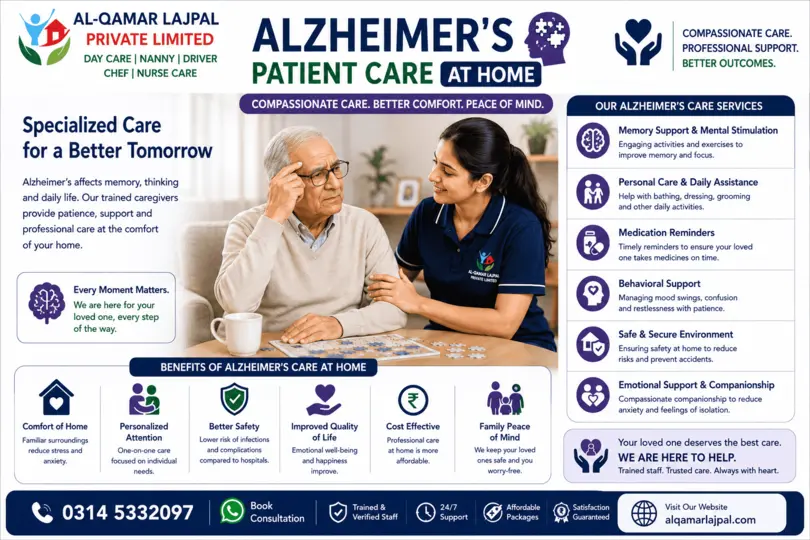
Alzheimer's Patient Care at Home: A Complete Guide for Families
Caring for a loved one with Alzheimer's disease is one of the greatest responsibilities a family can face. Alzheimer's is a progressive neurological condition that affects memory, thinking, behavior, and the ability to perform everyday activities. As the disease advances, patients require increasing levels of support, patience, and professional care.
Providing Alzheimer's patient care at home allows individuals to remain in a familiar environment, reducing stress and helping them maintain a better quality of life. However, successful home care requires proper planning, safety measures, emotional support, and skilled caregivers.
This guide explains everything families need to know about Alzheimer's patient care at home.
What is Alzheimer's Disease?
Alzheimer's disease is the most common form of dementia. It gradually damages brain cells, causing memory loss, confusion, personality changes, and difficulty completing daily tasks.
Common symptoms include:
-
Memory loss
-
Forgetting names and places
-
Confusion about time and location
-
Difficulty communicating
-
Mood swings
-
Anxiety and depression
-
Wandering away from home
-
Poor judgment
-
Difficulty recognizing family members
-
Trouble eating or swallowing (in later stages)
The disease progresses slowly, making long-term care essential.
Why Choose Alzheimer's Patient Care at Home?
Home care provides a comfortable, familiar, and less stressful environment compared to institutional care.
Benefits include:
-
Familiar surroundings reduce confusion
-
Personalized one-on-one attention
-
Lower stress and anxiety
-
Better emotional support
-
Improved daily routine
-
Family involvement in care
-
Reduced risk of infections
-
Greater independence during early stages
Professional caregivers also help reduce caregiver burnout for family members.
Daily Care Needs of Alzheimer's Patients
People living with Alzheimer's require assistance with many daily activities.
These include:
-
Personal hygiene
-
Bathing
-
Dressing
-
Toileting assistance
-
Meal preparation
-
Feeding support
-
Medication reminders
-
Walking assistance
-
Exercise supervision
-
Sleep routine management
-
Emotional companionship
Creating a consistent routine helps patients feel more secure and reduces confusion.
Creating a Safe Home Environment
Safety is one of the most important aspects of Alzheimer's patient care at home.
Families should:
-
Remove loose rugs
-
Install grab bars in bathrooms
-
Keep floors clutter-free
-
Lock dangerous cabinets
-
Label important rooms
-
Improve lighting throughout the house
-
Install door alarms
-
Secure sharp objects
-
Keep emergency contact numbers visible
-
Use non-slip flooring
A safe environment helps prevent falls, injuries, and wandering incidents.
Communication Tips
As Alzheimer's progresses, communication becomes increasingly difficult.
Helpful communication techniques include:
-
Speak slowly and clearly
-
Maintain eye contact
-
Use simple sentences
-
Give one instruction at a time
-
Avoid arguing
-
Be patient
-
Use a calm voice
-
Smile often
-
Offer reassurance
-
Listen carefully
Positive communication reduces frustration and anxiety.
Nutrition for Alzheimer's Patients
Proper nutrition supports overall health and brain function.
Healthy dietary tips include:
-
Fresh fruits
-
Vegetables
-
Whole grains
-
Lean proteins
-
Fish
-
Eggs
-
Dairy products
-
Healthy fats
-
Plenty of water
-
Small frequent meals
Avoid excessive sugar, processed foods, and dehydration.
Managing Behavioral Changes
Behavioral symptoms are common in Alzheimer's disease.
Patients may experience:
-
Aggression
-
Restlessness
-
Confusion
-
Hallucinations
-
Anxiety
-
Depression
-
Repetitive questions
-
Wandering
-
Sleep disturbances
Caregivers should remain calm, avoid confrontation, redirect attention, and identify possible triggers for challenging behaviors.
Physical Activity Matters
Regular movement helps maintain mobility and improves mood.
Recommended activities include:
-
Walking
-
Gentle stretching
-
Chair exercises
-
Light gardening
-
Music therapy
-
Simple household tasks
Exercise also promotes better sleep and reduces restlessness.
Emotional Support for Alzheimer's Patients
Patients often feel frightened or confused.
Family members should:
-
Spend quality time together
-
Encourage social interaction
-
Play familiar music
-
Look through family photos
-
Celebrate small achievements
-
Maintain daily routines
-
Offer reassurance regularly
Emotional care is just as important as physical care.
Supporting Family Caregivers
Caring for someone with Alzheimer's can be physically and emotionally demanding.
Family caregivers should:
-
Take regular breaks
-
Share responsibilities
-
Seek professional home care support
-
Join caregiver support groups
-
Prioritize their own health
-
Get enough sleep
-
Ask for help when needed
Healthy caregivers provide better care.
When Professional Alzheimer's Home Care is Needed
Professional caregiving may become necessary when the patient:
-
Frequently wanders
-
Requires full assistance with daily activities
-
Has difficulty swallowing
-
Becomes aggressive
-
Needs medication management
-
Experiences frequent falls
-
Requires 24-hour supervision
Experienced caregivers provide compassionate assistance while ensuring patient safety and comfort.
Final Thoughts
Alzheimer's patient care at home requires patience, compassion, and proper planning. A structured routine, safe living environment, balanced nutrition, emotional support, and professional caregiving can significantly improve the patient's quality of life. Families should remember they do not have to manage Alzheimer's alone. Professional home care services provide valuable support, allowing patients to receive personalized care while remaining in the comfort of their own homes.
Frequently Asked Questions
Alzheimer's patient care at home involves providing personalized support with daily activities, medication management, safety supervision, nutrition, mobility assistance, and emotional companionship within the patient's own home.
Yes. Many Alzheimer's patients can safely remain at home with proper safety modifications, structured routines, and professional caregiving support as their condition progresses.
Professional caregivers assist with bathing, dressing, feeding, medication reminders, mobility, companionship, behavior management, fall prevention, and continuous supervision based on the patient's needs.
Families should consider hiring a caregiver when memory loss begins affecting daily activities, when the patient requires constant supervision, experiences wandering, or when family caregivers need additional support.
Home care allows Alzheimer's patients to stay in a familiar environment, which can reduce confusion and anxiety. It also provides personalized one-on-one care, greater family involvement, and improved comfort and quality of life.
Need Professional Alzheimer's Patient Care at Home?
Al-Qamar Lajpal provides compassionate and professional Alzheimer's patient care services designed to support both patients and their families. Our experienced caregivers assist with personal care, medication reminders, mobility support, companionship, daily living activities, and 24/7 home care.
- Affordable Caregiver Services at Home
- Affordable Home Nursing Services
- Diabetes Patient Care
- Disabled Care at Home
- Blood Test at Home
- Affordable Home Patient Attendant
- Nanny Services
📞 Call or WhatsApp: 0314 5332097
🌐 Website: alqamarlajpal.com
Let our trained caregivers help your loved one live safely, comfortably, and with dignity at home.