
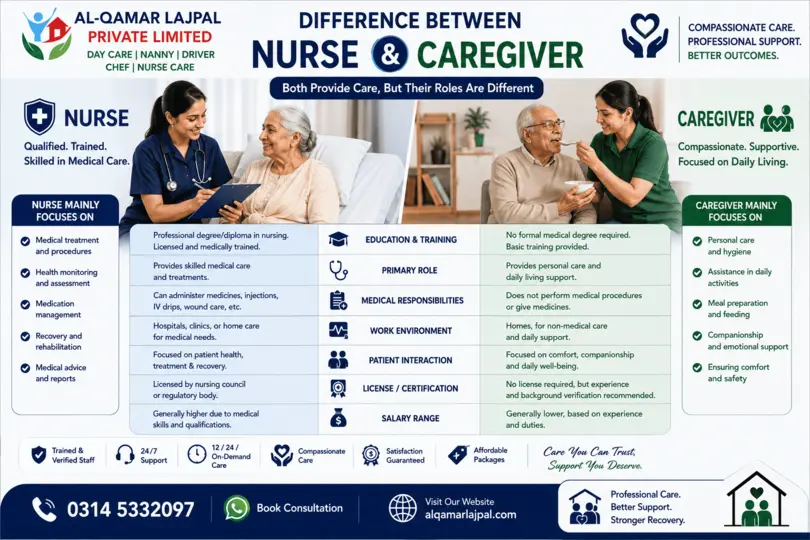
Difference Between Nurse and Caregiver: Which One Does Your Loved One Need?
When a family member becomes ill, grows older, or needs assistance after surgery, one of the first questions families ask is whether they should hire a nurse or a caregiver. Although these two roles often work together, they have different responsibilities, training, and purposes.
Understanding the difference between nurse and caregiver will help you choose the right professional for your loved one's health, comfort, and recovery.
What Is a Nurse?
A nurse is a trained healthcare professional who has completed formal nursing education and clinical training. Nurses are qualified to provide medical care, monitor health conditions, administer medications, and assist patients with complex medical needs.
Depending on the patient's condition, nurses may work in hospitals, clinics, nursing homes, or provide professional care at home.
Responsibilities of a Nurse
A professional nurse can perform medical tasks such as:
-
Administering injections and IV drips
-
Giving prescribed medications
-
Monitoring blood pressure, pulse, oxygen level, and temperature
-
Wound dressing and post-surgical care
-
Catheter care and replacement
-
NG tube and feeding tube management
-
Tracheostomy care
-
Oxygen therapy
-
Diabetes management and insulin administration
-
Monitoring patient recovery
-
Coordinating with doctors and specialists
-
Maintaining medical records
Because nurses have medical training, they are essential for patients who require continuous clinical supervision.
What Is a Caregiver?
A caregiver is someone who provides non-medical support to people who need assistance with daily living activities. Caregivers focus on improving the patient's comfort, safety, dignity, and quality of life.
Many elderly individuals, disabled people, and patients recovering at home benefit greatly from caregiver services.
Responsibilities of a Caregiver
A caregiver usually helps with:
-
Personal hygiene and bathing
-
Dressing and grooming
-
Meal preparation and feeding
-
Mobility assistance
-
Walking support
-
Toileting assistance
-
Changing diapers
-
Light housekeeping
-
Medication reminders
-
Emotional support and companionship
-
Helping patients attend appointments
-
Keeping patients active and socially engaged
Unlike nurses, caregivers do not perform medical procedures unless they have additional healthcare qualifications.
Difference Between Nurse and Caregiver
Here are the main differences between the two roles:
| Nurse | Caregiver |
|---|---|
| Medical professional | Non-medical support provider |
| Licensed or professionally trained | May have caregiver training but not nursing qualifications |
| Can administer medication | Usually provides medication reminders only |
| Performs injections, IV drips, wound care | Assists with daily living activities |
| Handles medical emergencies | Reports emergencies to family or medical staff |
| Suitable for critical and medical patients | Suitable for elderly, disabled, and daily assistance |
When Should You Hire a Nurse?
Hiring a nurse is the right choice when your loved one needs professional medical care.
Examples include:
-
Post-surgery recovery
-
Stroke rehabilitation
-
ICU patient care at home
-
Ventilator care
-
Tracheostomy care
-
Catheter management
-
Diabetes management
-
Cancer patient care
-
Wound dressing
-
Medication administration
-
IV infusion therapy
-
Chronic disease management
When Should You Hire a Caregiver?
A caregiver is ideal when the patient mainly needs help with everyday activities rather than medical treatment.
Caregivers are suitable for:
-
Elderly parents living alone
-
Patients recovering after hospital discharge
-
Disabled individuals
-
Dementia and Alzheimer's patients
-
Parkinson's disease patients
-
Individuals with limited mobility
-
Bedridden patients needing daily assistance
-
Companionship for seniors
Can a Nurse and Caregiver Work Together?
Yes. In many home care situations, families hire both a nurse and a caregiver.
For example:
-
The nurse visits to provide medications, wound care, and medical monitoring.
-
The caregiver stays with the patient to help with bathing, feeding, mobility, companionship, and daily activities.
This combination provides complete medical and personal care while allowing patients to remain comfortable at home.
Benefits of Hiring the Right Professional
Choosing the right support offers many advantages:
-
Better recovery at home
-
Reduced hospital visits
-
Improved patient safety
-
Greater comfort and independence
-
Emotional support for patients
-
Reduced stress for family members
-
Personalized one-on-one care
-
Better quality of life
How to Decide Between a Nurse and a Caregiver
Ask yourself these questions:
-
Does the patient require medical treatment?
-
Are injections or IV medications needed?
-
Is wound dressing required?
-
Does the patient only need help with bathing and meals?
-
Does the patient need companionship throughout the day?
-
Has a doctor recommended skilled nursing care?
Answering these questions will help determine whether you need a nurse, a caregiver, or both.
Final Thoughts
Understanding the difference between nurse and caregiver is essential before arranging home care services. Nurses provide professional medical treatment, while caregivers focus on assisting with daily living activities and emotional support.
The right choice depends on your loved one's medical condition, level of independence, and personal care needs. In many situations, combining both services provides the highest level of comfort, safety, and quality care at home.
Frequently Asked Questions
A nurse provides professional medical care, while a caregiver assists with daily living activities such as bathing, feeding, dressing, and companionship.
No. Medical procedures such as injections, IV drips, and wound care should only be performed by qualified nurses or licensed healthcare professionals.
If they only need assistance with daily activities, a caregiver is usually sufficient. If they have medical conditions requiring treatment or monitoring, a nurse may also be needed.
In most cases, home nursing costs more because it involves skilled medical care and professional clinical expertise.
Yes. Many families choose both services to ensure their loved one receives comprehensive medical care along with daily personal assistance.
Need Professional Nurses or Caregivers?
Whether your loved one requires skilled nursing care or compassionate caregiver support, Al-Qamar Lajpal is here to help. Our experienced healthcare professionals provide reliable home care services tailored to your family's needs.
- Affordable Caregiver Services at Home
- Affordable Home Nursing Services
- Diabetes Patient Care
- Disabled Care at Home
- Blood Test at Home
- Affordable Home Patient Attendant
- Nanny Services
📞 Call / WhatsApp: 0314 5332097
🌐 Website: alqamarlajpal.com
Contact us today to discuss your home care requirements and receive professional guidance on choosing the right care solution.